Blockchain 101
What is a Blockchain?
A blockchain is a distributed database where every entry needs to be approved by a network of peers without any intervention from an intermediary or central authority.
Lets clear up the confusion. Blockchain is actually a database because it is a digital ledger that stores information in data structures called blocks. On the contrary, database stores information in data structures called tables. Blockchain is a database but database is not a blockchain. While they maybe do the exact same thing, they differ in design.
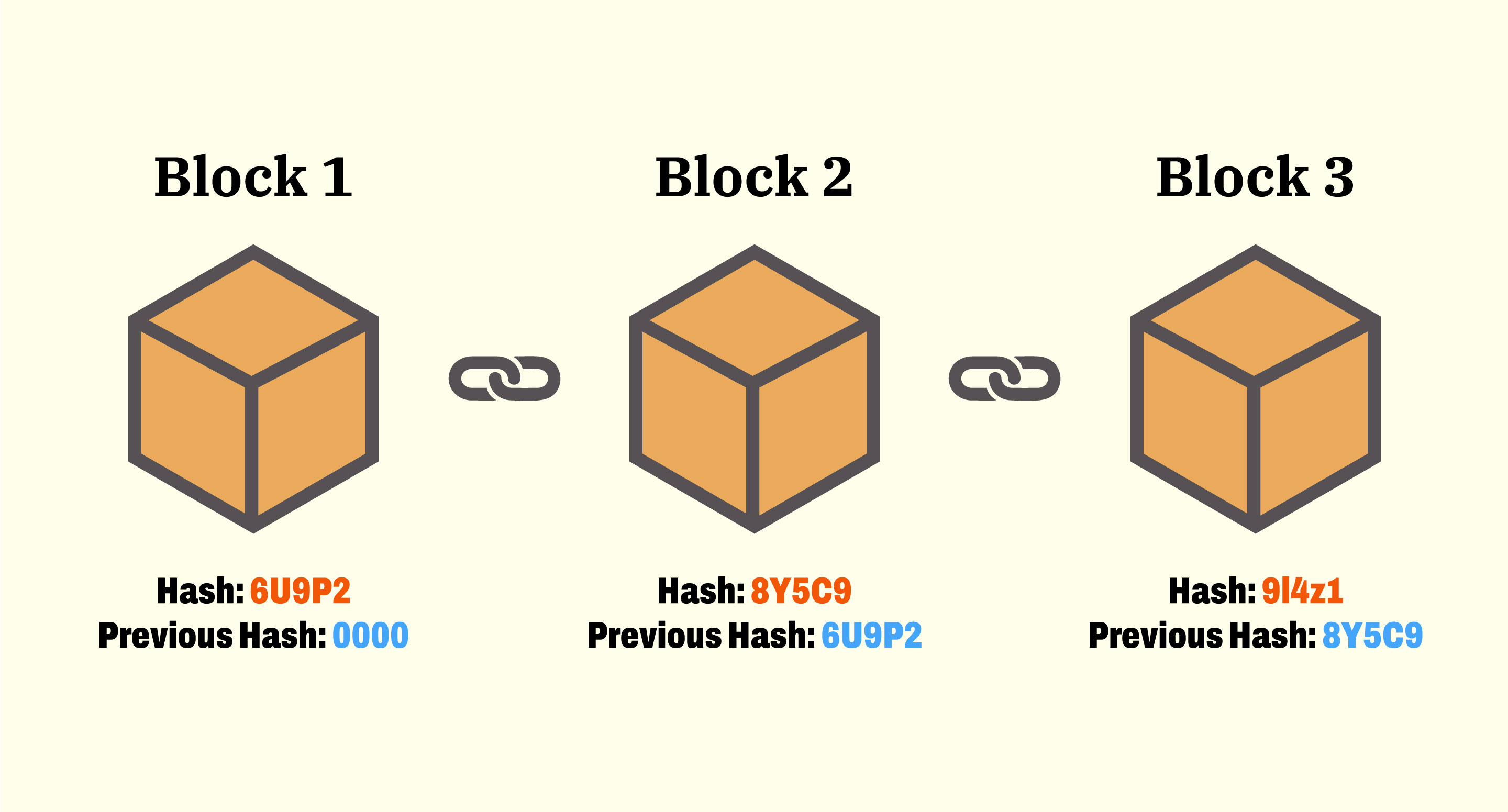
Okay so what does the first paragraph mean? Blockchain continuously grows its list of ordered records, called "blocks" or as we called it data. Each block contains a cryptographic hash of the previous block, a timestamp, and transaction data. The previous block hash links the blocks together and prevents any block from being altered or a block being inserted between two existing blocks. All these blocks form a chain of data that is hard to be tampered from outside force delivering the key strength of immutability. This builds a ledger of transactions you and other network members can trust.
What is Transaction?
A transaction is a transfer of value on the blockchain. In very simple terms, a transaction is when one person gives a designated amount of cryptocurrency they own to another person.
Here is an example of steps to create transaction in the blockchain:
- Someone requests a transaction. The transaction could involve cryptocurrency, contracts, records, or other information.
- Transaction is broadcast to all peer-to-peer participation computers in the specific blockchain network. These are called nodes. All transactions are published to the memory pool, where they are considered ‘pending’. Gas fees are paid by users (you or the person that made the transaction in the first place) as part of the transaction to compensate for the computing energy required to process and validate transactions on the blockchain.
- Miners verify the transaction. Every computer in the network checks the transaction against some validation rules that are set by the creators of the specific blockchain network.
- Validated transactions are stored into a block and are sealed with a lock referred to as the hash.
- New block is added to the existing Blockchain. The transaction is complete. Now the transaction is part of the blockchain and cannot be altered in any way.
These transactions are made by a consensus that the crypto network had designed for users like you and I. This process if known as 'proof-of-work'.
Proof of Work
The requirement that the people who own the computers in the network have to solve a complex mathematical problem to be able to add a block to the chain. Solving the problem is known as mining, and ‘miners’ are usually rewarded for their work in cryptocurrency.
Definitions
Immutability - the ability of a blockchain ledger to remain unchanged, unaltered, and indelible.
Digital ledger - ledger is a database held and updated independently by each participant (or node) in a large network.
hash - refers to the transformation and generation of input data of any length into a string of a fixed size, which is the implementation of a cryptographic hash function to prevent fraudulent transactions.
Peer-to-peer - refers to decentralized networks of interconnected computer systems containing peers, or nodes. Without the need of any intermediaries or central server.
Nodes - store a complete copy of the distributed ledger and are responsible for the reliability of the stored data.
Mining - The competitive process that verifies and adds new transactions to the blockchain for a cryptocurrency that uses the proof-of-work (PoW) method. The miner that wins the competition is rewarded with some amount of the currency and/or transaction fees.
Why Blockchain?
Well, because of it's benefits that blockchain offers to individuals. It increases trust, security, transparency, and the authenticity of a transaction is verified and confirmed by participants with low cost.
On my next blog I will go over the benefits of blockchain and why it's more beneficial than a traditional database.
Conclusion
It’ll take many years and buy-in from numerous different industries before blockchain becomes the commonplace for technology. If you look at the papers, web3 theoretically solves the issues that web2 has. However, since it's still at its infancy stage, we cannot say for certain that it's going to replace it. I for myself believe this technology could replace the web2 space through time and forming large communities to help create a change.
